
The guide that started it
A while back I was messing around with Claude on the web app, not Claude Code, just the chat interface, and I described what I wanted to build: a Wizardry-style first-person dungeon crawler that could run on any device, install as an app, sync saves across devices, and cost me nothing to host. Classic grid-based movement, turn-based combat, the works.
And of course it needed to be based on my world of Ave Molech.
Claude helped me build out a proper game design guide. Stack decisions, architecture, phased build plan, everything. The key choices came down fast: Vite with vanilla JavaScript (no game engine, a turn-based grid game doesn’t need one), Supabase for cloud saves (free tier, Postgres, auth, API all-in-one), and Vercel for hosting with auto-deploys from GitHub. Total cost to start: zero.
That guide became the blueprint.
What vibe coding actually looks like
It means you sit down for a two-hour session with Claude Code open, you describe what you want, and you watch it write files you couldn’t have written yourself in anywhere close to that time. It also means you get something that mostly works and then spend 45 minutes figuring out why one specific edge case is broken. Then you fix it and feel great. Then you find another one. If you’re like me you cus Claude out for being a stupid piece of shit for not following the Skill, memory and other MD files I took the time to setup.
It is not magic. It is fast, effective, and genuinely fun, but it’s collaborative in the real sense. You’re making decisions constantly. What to build next. What to cut. When the approach is wrong and needs to be scrapped. When the thing it generated is technically correct but not what you actually wanted.
The sessions ran anywhere from one to four hours. Over roughly a week of evenings and weekend blocks, the game went from nothing to deployed.
How the build went
The project broke naturally into four phases, which is almost exactly what the original guide laid out.
- Phase 1: Renderer and basic movement. A pseudo-3D first-person view drawn on an HTML5 canvas, WASD controls on desktop, touch buttons on mobile. Local saves only. Just get something on screen you can walk around in.
- Phase 2: The actual game. Character classes pulled from the Ave Molech rulebooks, spells, equipment, lore-accurate enemies from Chapter 8 of the campaign setting, a second dungeon level with stair transitions. The monsters aren’t invented, they’re from the books. Witiku, Ankheg, Phantom Fungus, Clockwork drones, all of it. Same with the equipment and currency system.
- Phase 3: Cloud sync. Supabase handles authentication and save storage. The entire game state serializes to a JSON blob per save slot. Row-level security means users can only ever touch their own data. This is the part that would’ve taken me days to wire up manually; it took one session.
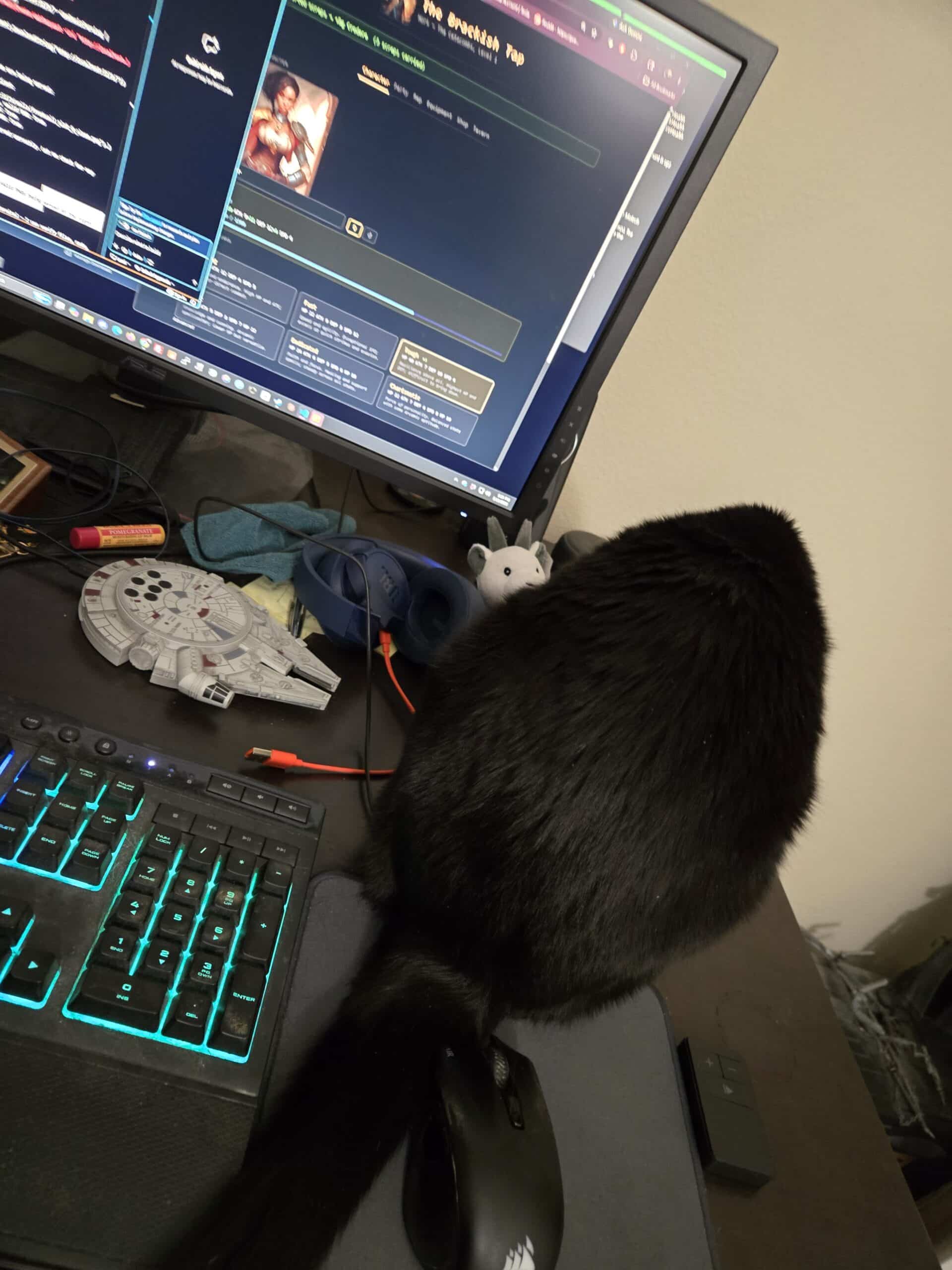
- Phase 4: Polish. A companion reputation system with a personal quest gate, bond scenes, camp art, monster portraits painted in a high-resolution fantasy RPG card style, all generated with Gemini. The combat UI got a full redesign with large portrait panels. The inn screen (“The Brackish Tap”) got save slot management and a job board.
The tech stack, high level
Nothing exotic here, which was intentional. The guide’s recommendation to skip game engines and frameworks entirely turned out to be right. Vanilla JavaScript means no abstraction layer between you and the canvas, no dependency on a framework’s update cycle, and nothing to fight when you need to do something slightly unusual.
The architecture is simple: a browser PWA that talks to a Supabase backend for saves and auth, deployed to Vercel with automatic builds on every push to main. The AI art pipeline, Gemini for generating dungeon wall textures, monster portraits, and scene art, turned out to be one of the more interesting parts of the build. Getting a consistent painted style across every asset took some iteration, but it’s cohesive.
What I’d tell someone starting this
- Start with the guide phase. Seriously. Spend an hour with Claude describing what you want, get a stack decision and a phased build plan in writing, and then start building. The sessions go much better when you know what you’re building toward.
- Keep sessions focused. “Let’s add the companion quest system” is a good session prompt. “Let’s add more stuff” is not. The more specific you are about what you want by the end of a session, the better the output.
- Read what gets generated. You are not a passenger. If you treat it as a black box that produces code you don’t look at, you will hit a wall somewhere and have no idea what’s in your own project.
- Use your source material. I had twenty years of lore sitting in books I’d written. That specificity, real monster names, real equipment, real world-building, is what makes the game feel like something instead of a generic dungeon crawler.
How long did it take?
I started vibe coding with Claude Code on this project May 10…Six days ago from the time I am posting this, and if Claude is accurate it took me a total of ~12 hours.
Here’s what shipped:
- Dungeon: Three levels of hand-designed catacombs, each with a pseudo-3D first-person view rendered on a 320×240 canvas. Minimap in the corner, full map behind M. Stair markers appear once you’ve explored 75% of a floor.
- Combat: Turn-based with individual party turns, enemy targeting, status effects, spells, consumables, and a Guard ability that lets certain classes take hits for the party. Every enemy has a portrait. When something hits you, the portrait shakes.
- Companions: Hire from a rotating roster at The Brackish Tap. Build friendship through dungeon runs, camp conversations, and completed quests. There’s a cap at 75 reputation until you finish their personal quest, then it opens to 100 where a bond scene triggers and you choose Best Friend or Romance. Romanced companions give a combat buff when they’re at camp with you.
- Job Board: Faction contracts from the Tempered Bank, Followers of Talon, and Followers of Sharess. Each job has a return-to-inn limit before it expires so you can’t farm the dungeon indefinitely.
- Camp: Rest the party, talk to companions, manage equipment mid-run. Audio shifts when you make camp.
- Sound: Three Kevin MacLeod tracks (inn, dungeon, combat) with procedural SFX for hits and camp. Abrupt cut into combat, fade back out after.
Play it now
The game is live at avemolech.vercel.app and mghurston.itch.io/avemolech
Visit the The Brackish Tap and delve into the Catacombs below the city of Hork.
Notice: No artwork from the original works was used as a seed or reference for the Gemini created artwork and only content authored by Michael G. Hurston was used for source material.
Updated May 22
Descend into the catacombs below Hork in this first-person turn-based RPG set in the tabletop world of Ave Molech: Ex Tenebris.
Hire companions, take faction jobs, explore three dungeon levels, and survive turn-based combat against the monsters of the Catacombs. Play free in your browser — no install required.
Based on the Ave Molech tabletop RPG by Michael G. Hurston.
What’s in the game?
A first-person dungeon crawler set in the Ave Molech tabletop RPG world. Descend into the Catacombs of Hork — an underground city beneath a post-apocalyptic industrial world — across 16 zones of turn-based combat.
Classes: Pick from 6 base classes (Strong, Fast, Tough, Smart, Dedicated, Charismatic) and progress through Advanced and Prestige tiers. 20 levels total with classes like Gunslinger, Fearasitic Mage, Shadow Dancer, and Dragonne.
Companions: Recruit 2 from a roster of 6 to fight alongside you. Each companion has their own class, spells, and personal quest. Build friendship, complete their quest, and unlock a bond scene — choose Best Friend or Romance. Romanced companions give a combat bonus when left at camp. Once you reach New Hus, unused companions can be sent on their own missions and return with rewards.
Combat: Turn-based party combat with weapons, armor, spells, and class abilities. Evasion, status effects, kill mastery bonuses, and faction reputation bonuses all factor into attack and defense.
World: 16 floors spanning the Catacombs, Sahenix Desert, Mudlands, Marshes, New Hus, Gwrenfaar, Sky Kingdom of Gal, Ice Plains of Germore, and the Northern Jungles. Shop in towns, earn faction rep with three rival factions, and fast-travel via caravan once zones are discovered.
Saves: 3 manual save slots plus autosave. Optional cloud saves with account login.
Pingback: How I Got Claude Code to Resume Itself Overnight