I Built My Own Fitness App, and So Will You
Go scroll the fitness category on the Google Play Store right now. There are hundreds of new apps. Solo Leveling and One Punch Man inspired apps, Workout loggers, calorie trackers, step-based RPGs, and almost all of them are free, monetized with microtransactions or an “optional” subscription nobody is required to buy.
That flood is what happens when the thing that used to be hard, building the app, stops being hard. People aren’t waiting for the perfect fitness app anymore. They’re building their own. Of course I did too. It took a day, and most of that day I wasn’t even at my computer.
That’s the part that should scare the people selling software and subscriptions.
A huge chunk of what these apps charge a recurring fee for is not hard software. Log a workout, track calories in vs. calories out, pull steps from Health Connect, give me some XP and a streak so my lizard brain stays interested. That’s it. That’s the product. For years the moat was “building an app is hard and you can’t do it, so pay us monthly forever.”
That moat is draining, and the Play Store is the evidence. When hundreds of people can describe the app they want and have a working build on their phone in a weekend, the price of “simple utility wrapped in a subscription” collapses toward zero, because the supply just exploded and most of it is free. Not all software. I’m not claiming your bank or your multiplayer game is getting vibe coded this weekend. But the “simple utility you rent monthly” business?
I genuinely think a lot of it is dead in the next 3 to 5 years.
So I built one too, and I’m giving away everything you’d need to do the same.
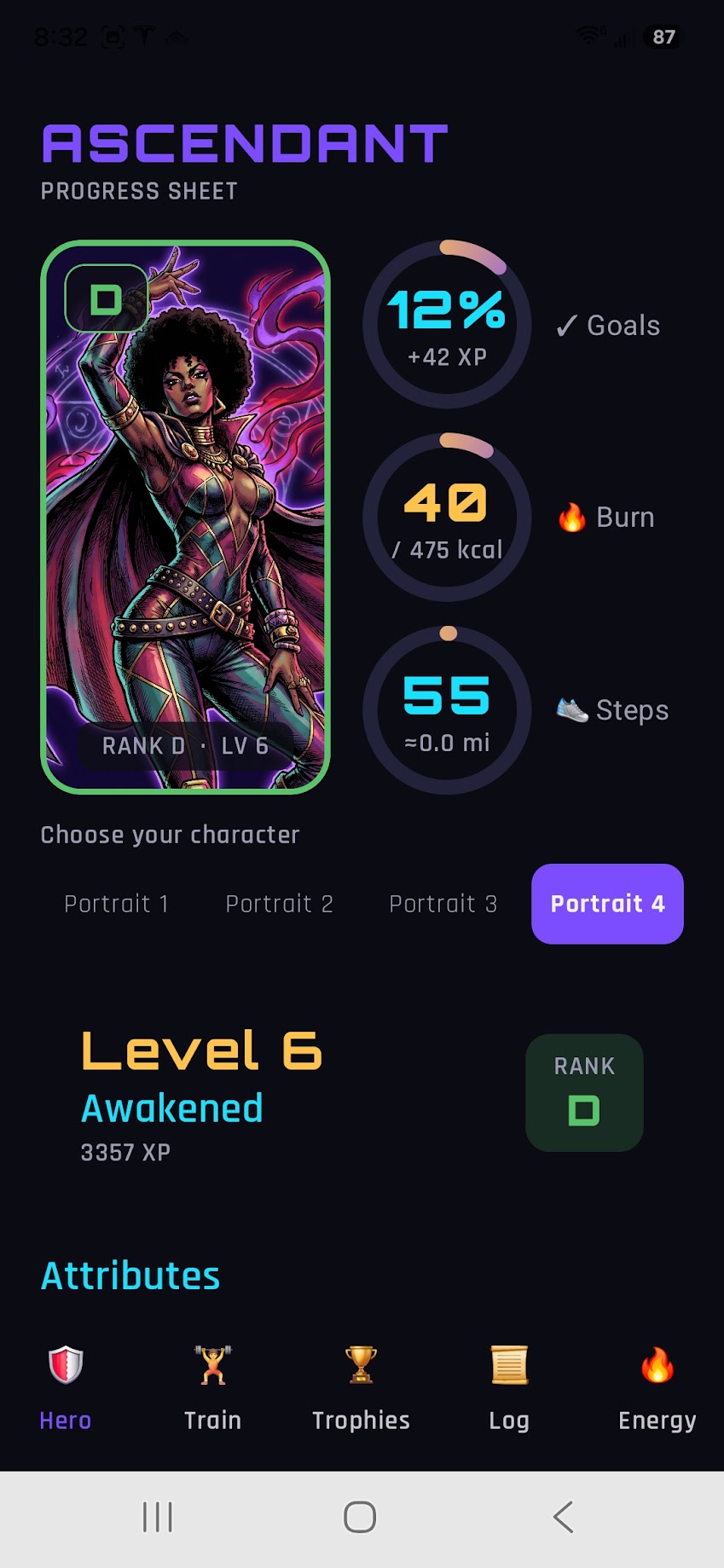
Meet ASCENDANT, an anime fitness RPG. Kotlin, Jetpack Compose, fully offline, no backend, no account, no subscription. You log workouts and walks, it turns your calories into XP, you level up, you chase achievements and streaks. The whole character is a pure function of your day log, so there’s nothing to sync and nothing to leak.
How it actually got built (mostly while I was at brunch witht the spouse)
Here’s the workflow, because the workflow is the actual lesson.
- Design docs first. Before any code, Claude and I wrote a handful of design docs to scope the thing and put up guardrails. What it is, what it explicitly is not, the data model, the progression math, a QA gate before anything hits my phone. This is the step everyone skips and then wonders why their AI wandered off and built a different app. Spend the boring hour up front. It’s the cheapest hour in the project.
- Let it run with bypass permissions. Once the rails were in place, I turned Claude loose with bypass permissions and walked out the door. I used my Claude Watch setup to keep it running while I was at brunch with my spouse (lol yes, the app built itself while I ate and drank). Came back, and it had churned through most of the scope without me babysitting every file write.
- Over the next couple of days I actually used the app on my phone and fed back small UI changes. Spacing, ring placement, a redesign of the walking screen. That’s it. No heroics, just using the thing and pointing at what felt off.
- Shipping to myself. No Play Store, no $25 dev account, no review queue. I build a debug APK, drop it in my Google Drive, and install it from there straight onto my phone. Done. And because I know someone will ask, if you do want to put your fork on the Play Store, I documented that whole path too. Upload key, signing config, AAB, Play App Signing. It’s in the runbook.
The point: I’m handing you the whole thing
This isn’t a “look what I made” post. The repo is public and it’s specifically set up so you and your AI can learn from it:
- The full working app, with build and run instructions
- The design docs that scoped it and kept the AI on rails
- A RUNBOOK.md that walks through building, running, the emulator, and now Play Store publishing if you want it
- A CLAUDE.md that’s the always-loaded brief so your agent doesn’t lose the plot
Clone it, point Claude Code at it, and tell it to build your fitness app. Or your habit tracker, or whatever subscription you’re currently annoyed about paying for.
Repo: https://github.com/mghurston/claudefitness